Uttam Nepal

Cybersecurity & Machine Learning

Building defenses that respond as fast as the threats they face.

I'm Uttam Nepal, a cybersecurity and machine learning researcher completing a Master of IT (Cybersecurity) at Melbourne Institute of Higher Education. My research focuses on robust, generalisable machine learning for cyber threat detection, currently centred on malicious URL detection.

View my researchHire me
Uttam Nepal
Cybersecurity
Machine Learning
Project Management
Web Development

Where I work

Cybersecurity
Machine Learning
Project Management
Web Development
Projects

SafeBrowse

SafeBrowse

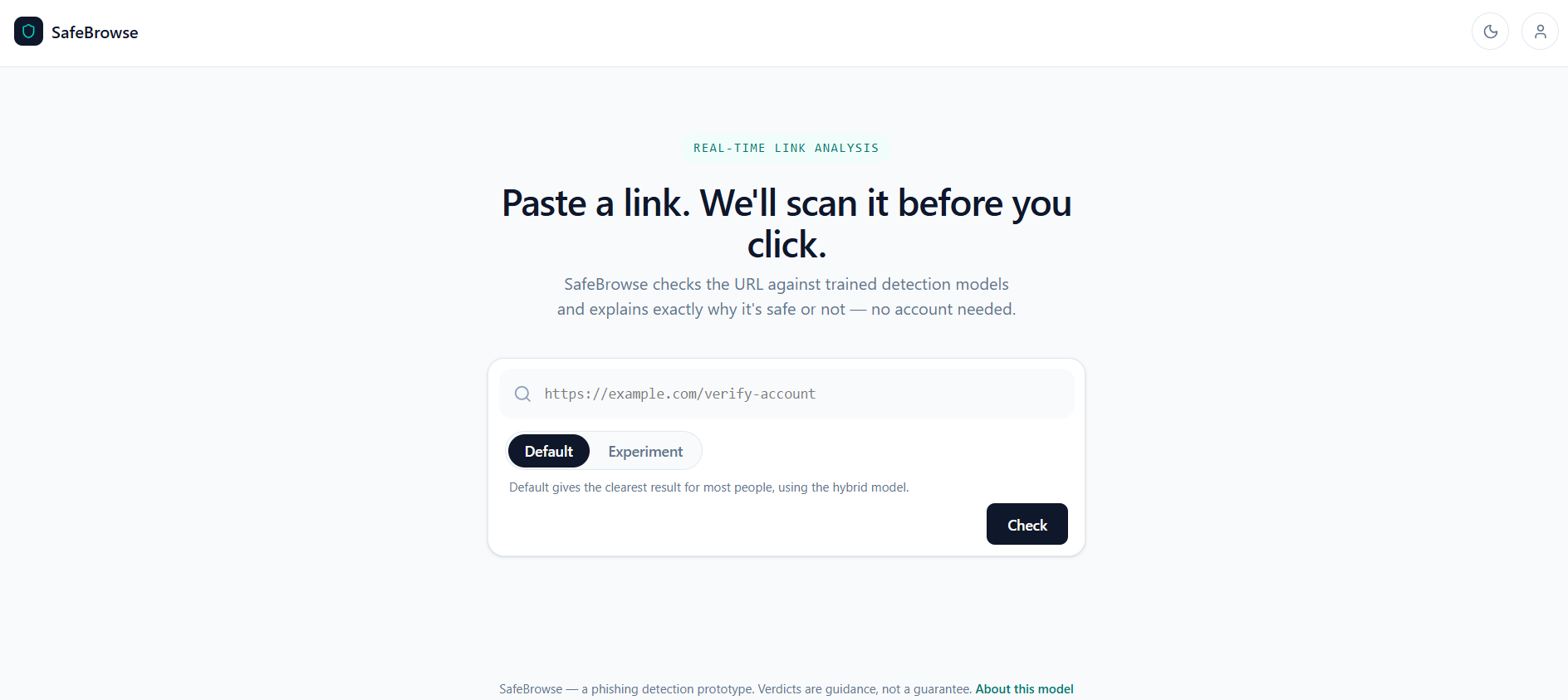
A full-stack hybrid machine learning web application for phishing and malicious URL detection, paste a URL, get an instant Safe/Unsafe classification with a confidence score and plain-language explanation, powered by seven independently trained models.

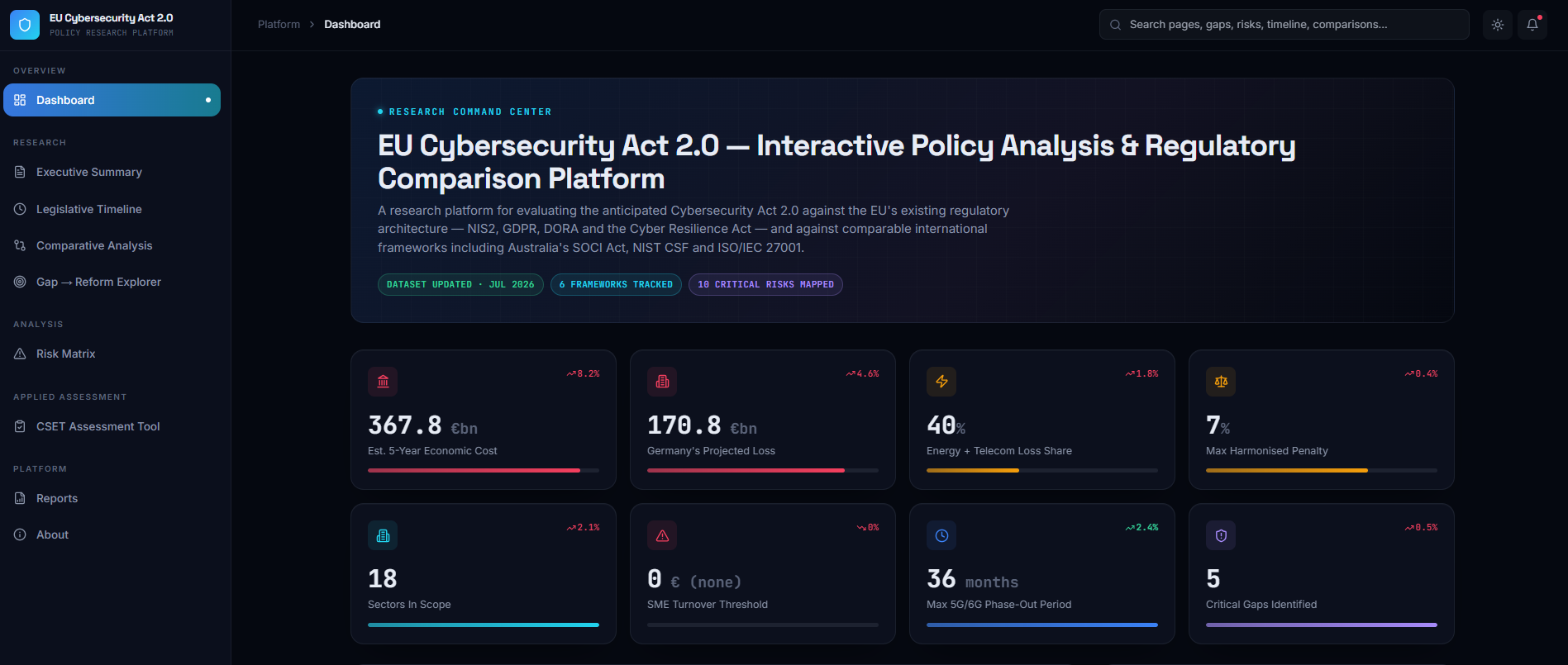
Interactive Policy Analysis & Regulatory Comparison Platform

Interactive Policy Analysis & Regulatory Comparison Platform

An interactive research platform built to accompany a university policy analysis report on the EU's proposed Cybersecurity Act 2.0, benchmarking it against Australia's SOCI Act and international standards.

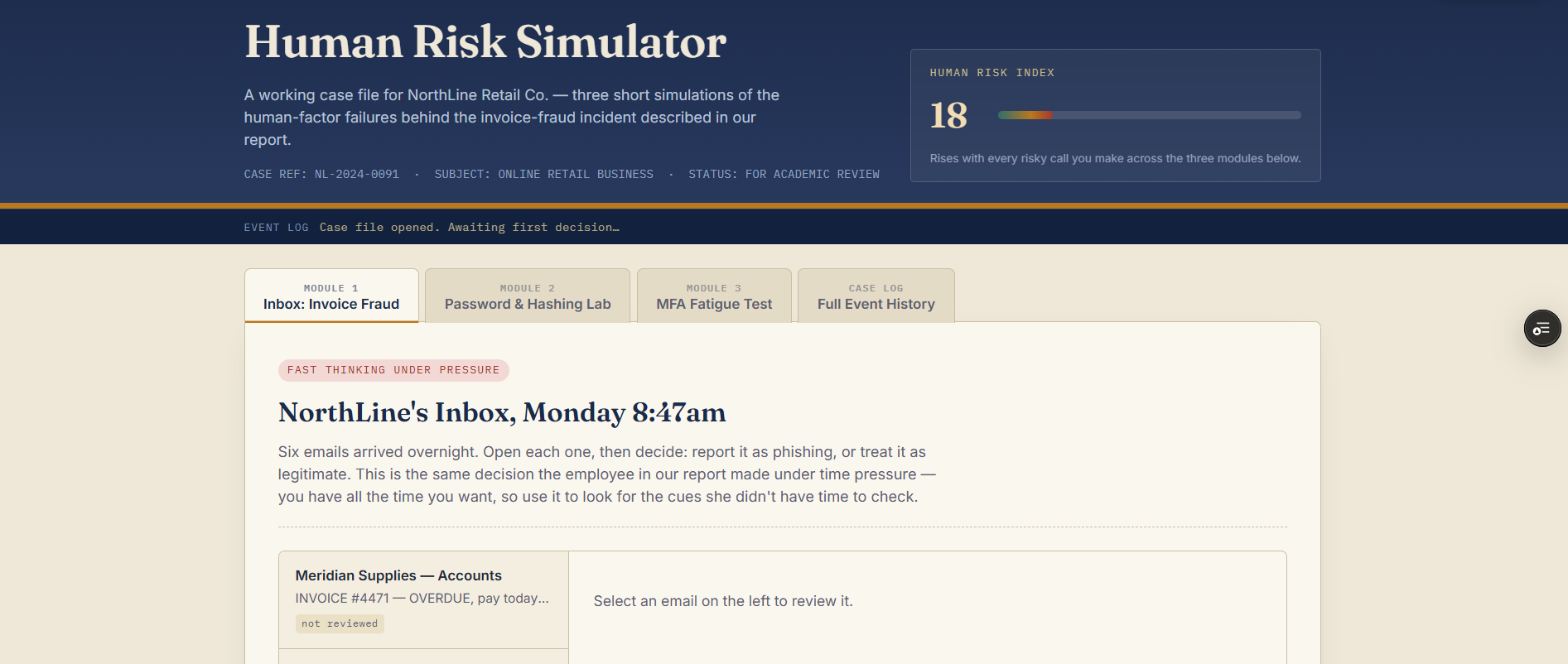
NorthLine Human Risk Simulator

NorthLine Human Risk Simulator

An interactive cybersecurity awareness tool built for a unit case study, simulating real-world social-engineering and security-hygiene failures for a fictional retail business, including an original, hand-written SHA-256 implementation.

View all projects

Research

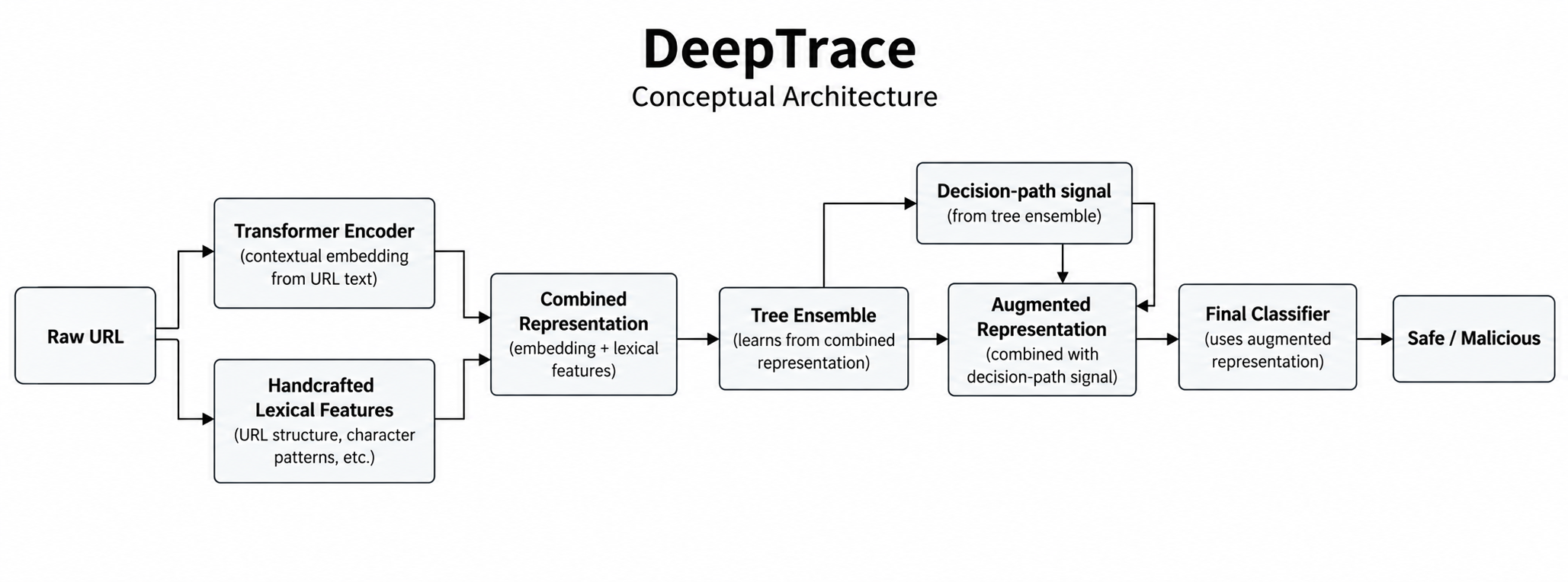
DeepTrace architecture diagram
Ongoing

DeepTrace

DeepTrace was the starting point of this research direction: a hybrid architecture combining a fine-tuned transformer-based URL encoder with handcrafted lexical features and a learned signal derived from a separately trained gradient-boosted tree ensemble. Evaluated across six progressively more complex configurations, the fully combined approach achieved the strongest result of any configuration tested, with accuracy and F1 above 98%. DeepTrace also underlies SafeBrowse, an applied browser-safety concept built around this detection approach (see Projects).

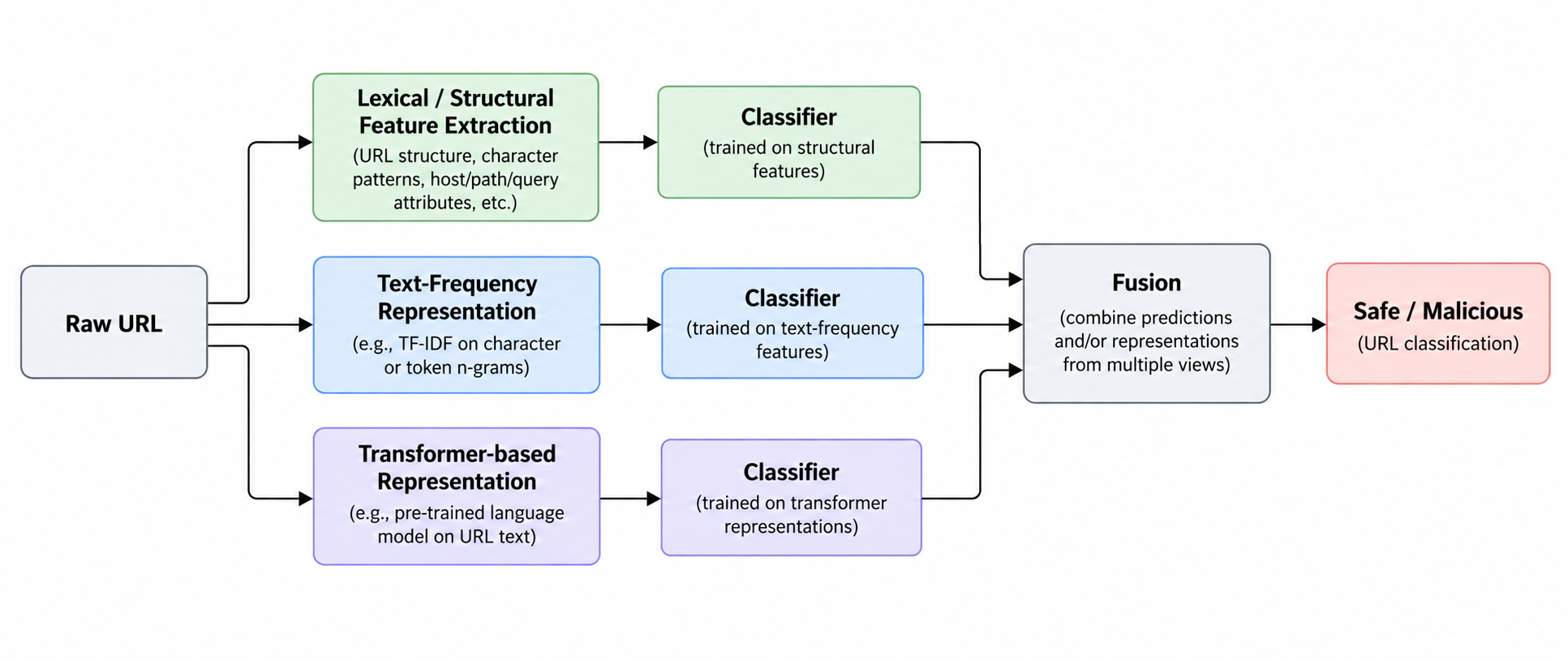
Multi-View Representation Fusion for Malicious URL Classification architecture diagram
Accepted for presentation

Multi-View Representation Fusion for Malicious URL Classification

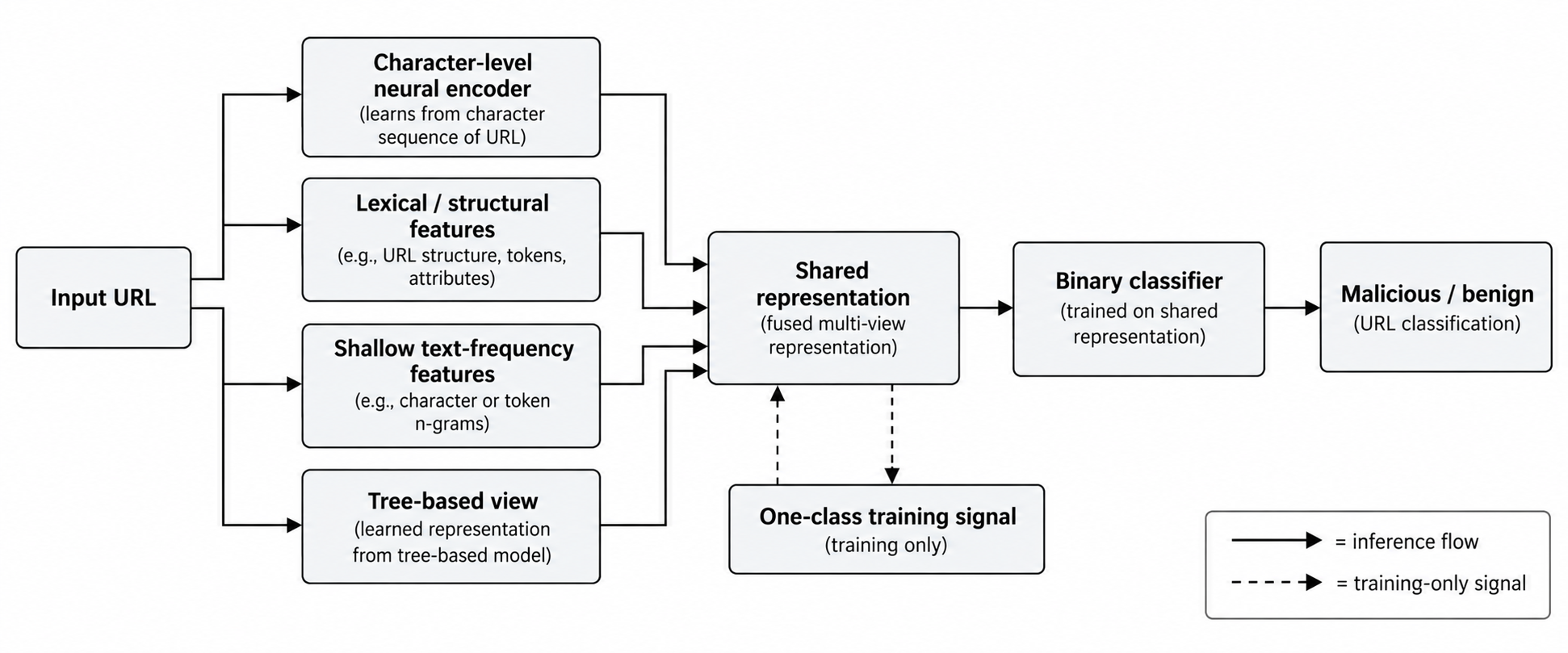
This research compares multiple complementary representations, handcrafted lexical/structural features, text-based (TF-IDF) representations, and transformer-based (BERT) embeddings, for classifying malicious URLs, evaluated under a registrable-domain-disjoint protocol that prevents URLs from the same domain appearing across training and test partitions. A meta-level fusion approach that combines these representations achieved the strongest result among all approaches compared, with an F1 score above 0.91.

One-Class Regularization for Cross-Source Malicious URL Detection architecture diagram
Ongoing

One-Class Regularization for Cross-Source Malicious URL Detection

This work extends a multi-view URL representation approach by introducing a support-aware (one-class) regularization term during training, testing whether shaping the learned representation around the geometry of malicious examples can improve detection, particularly at the low false-positive-rate operating points that matter most for real deployment. Evaluated across two independent public URL datasets, the approach shows a modest but consistent shift in error patterns compared to a matched control, and reveals a strongly asymmetric transfer pattern between the two datasets.

View all research