Research
Robust, generalisable machine learning for cyber threat detection.
The research story
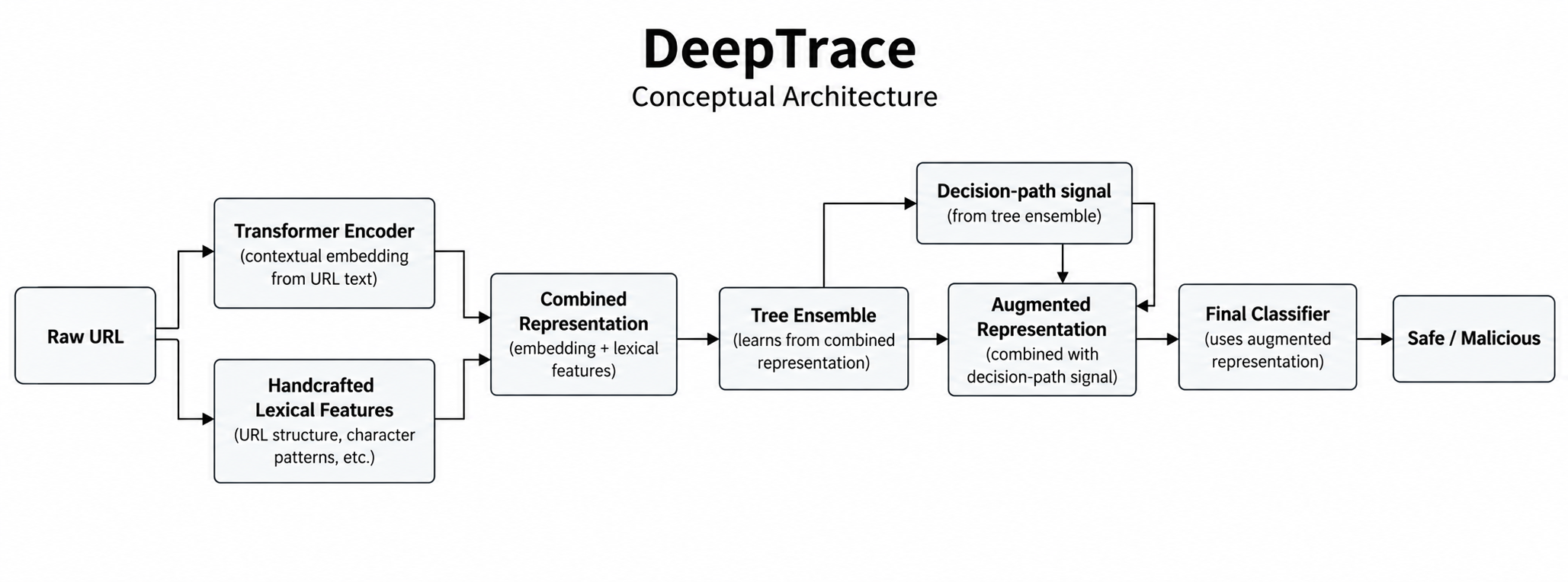
A malicious URL is usually the first thing standing between someone and an attack, a single click before any page has even loaded. That's what drew me to this problem in the first place. If the URL alone carries enough signal to warn someone in time, that seemed worth getting right. DeepTrace was my first real attempt: a hybrid architecture combining a fine-tuned language model with handcrafted lexical features and a signal borrowed from the internal structure of a tree ensemble. It performed well, and for a while I thought that was the end of the story.
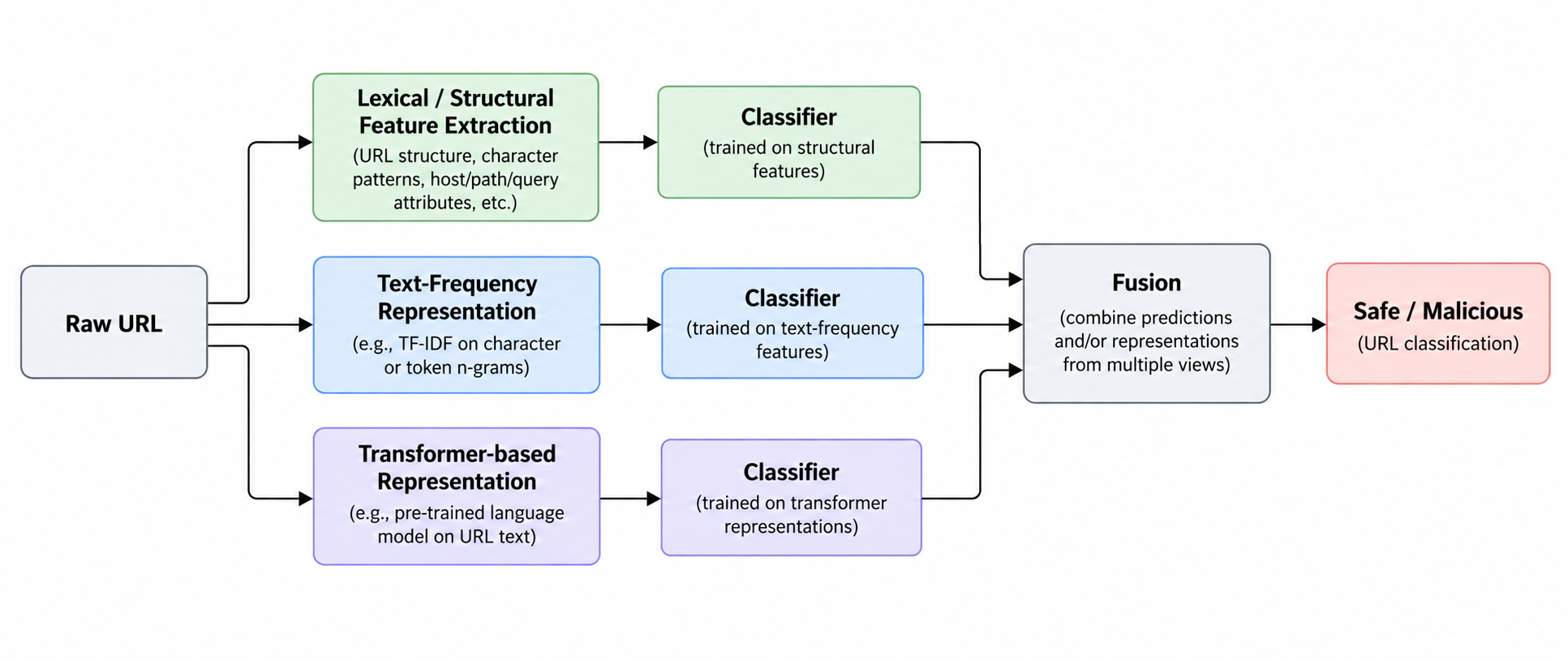
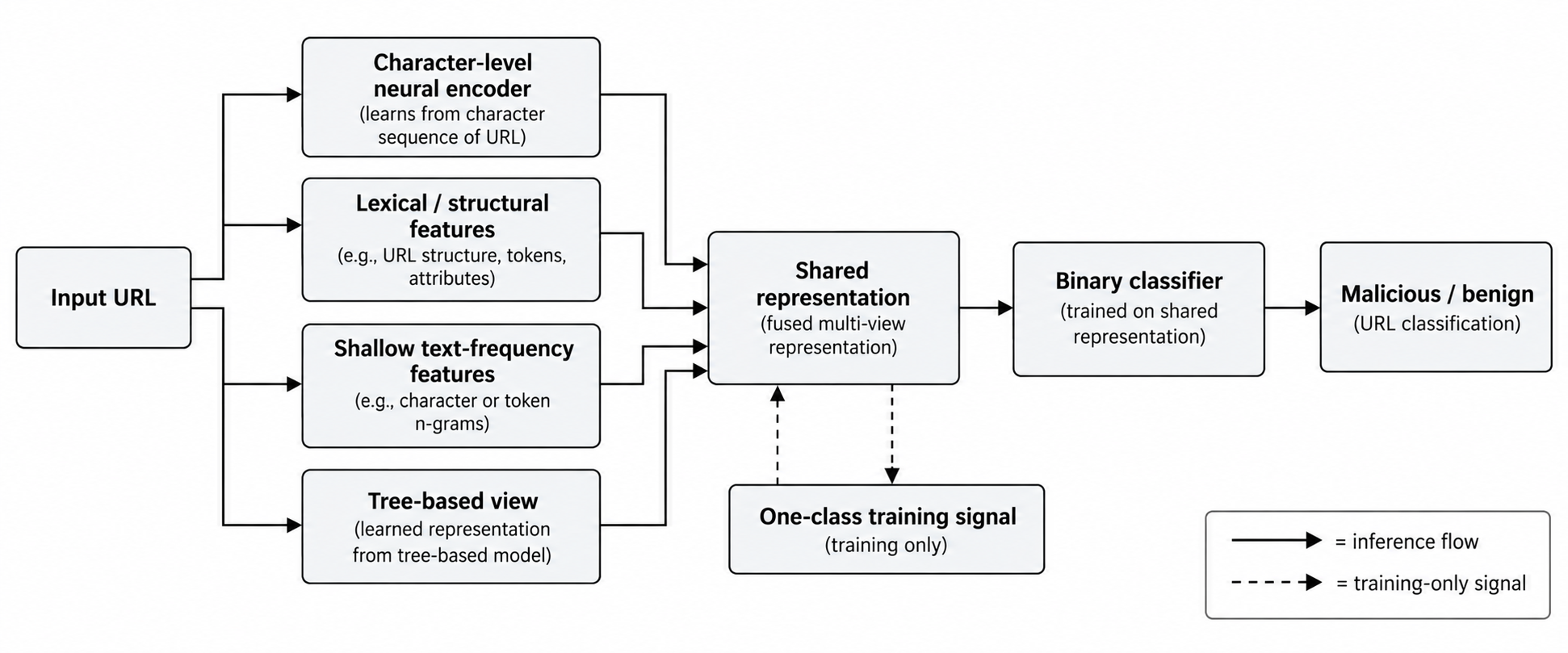
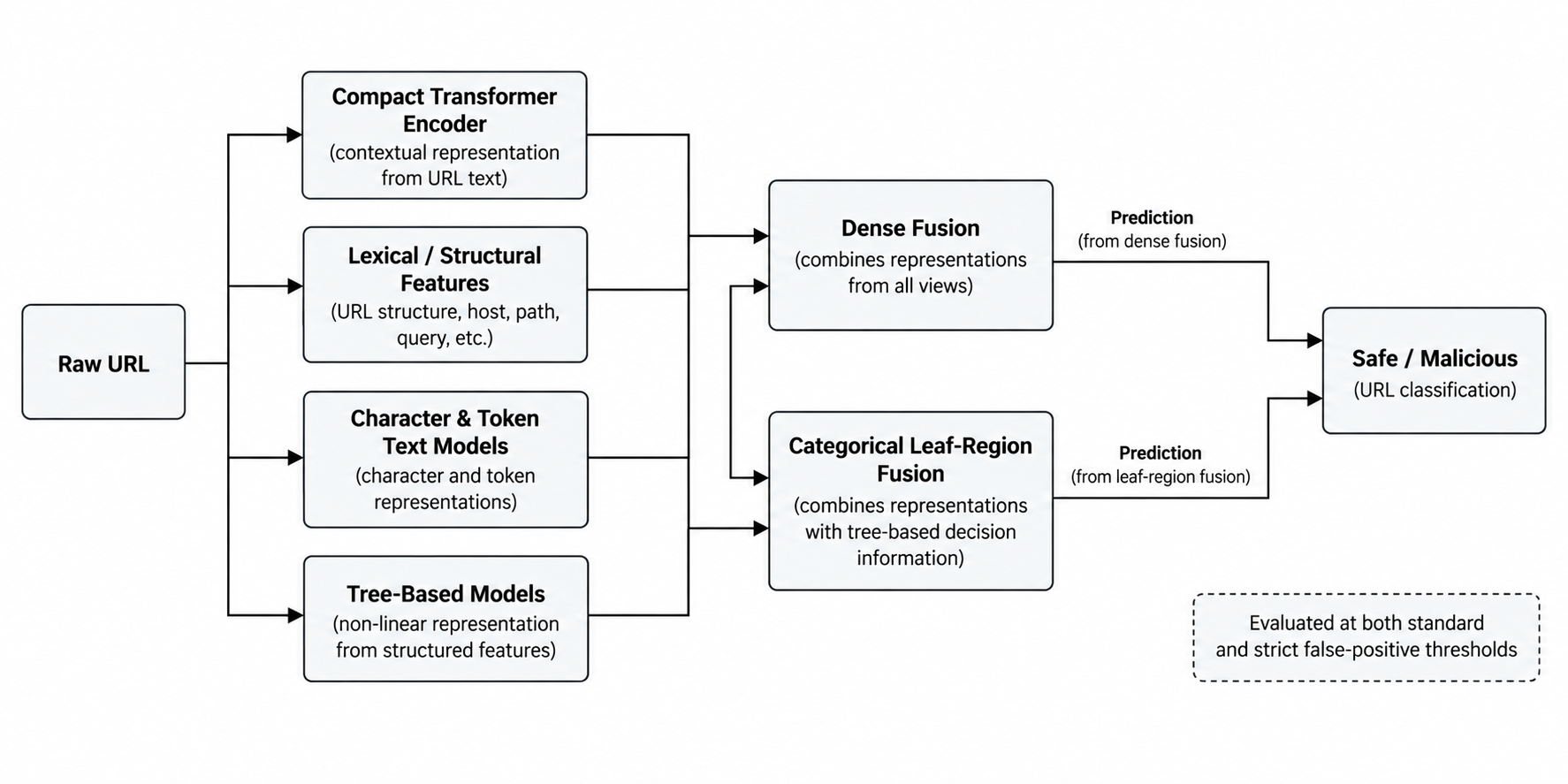
It wasn't. Going back over that early work, I found methodological issues I hadn't caught the first time around: non-disjoint train/test splitting and evaluation leakage that made the results look stronger than they really were. Not a comfortable thing to notice in your own work. But instead of quietly moving past it, I treated it as the actual starting point and rebuilt the evaluation from scratch. That correction is what led to SafeBrowse, a broader browser-safety concept built around the same idea, and eventually to TURL-MV, a corrected and much more extended multi-view framework for detecting malicious URLs.
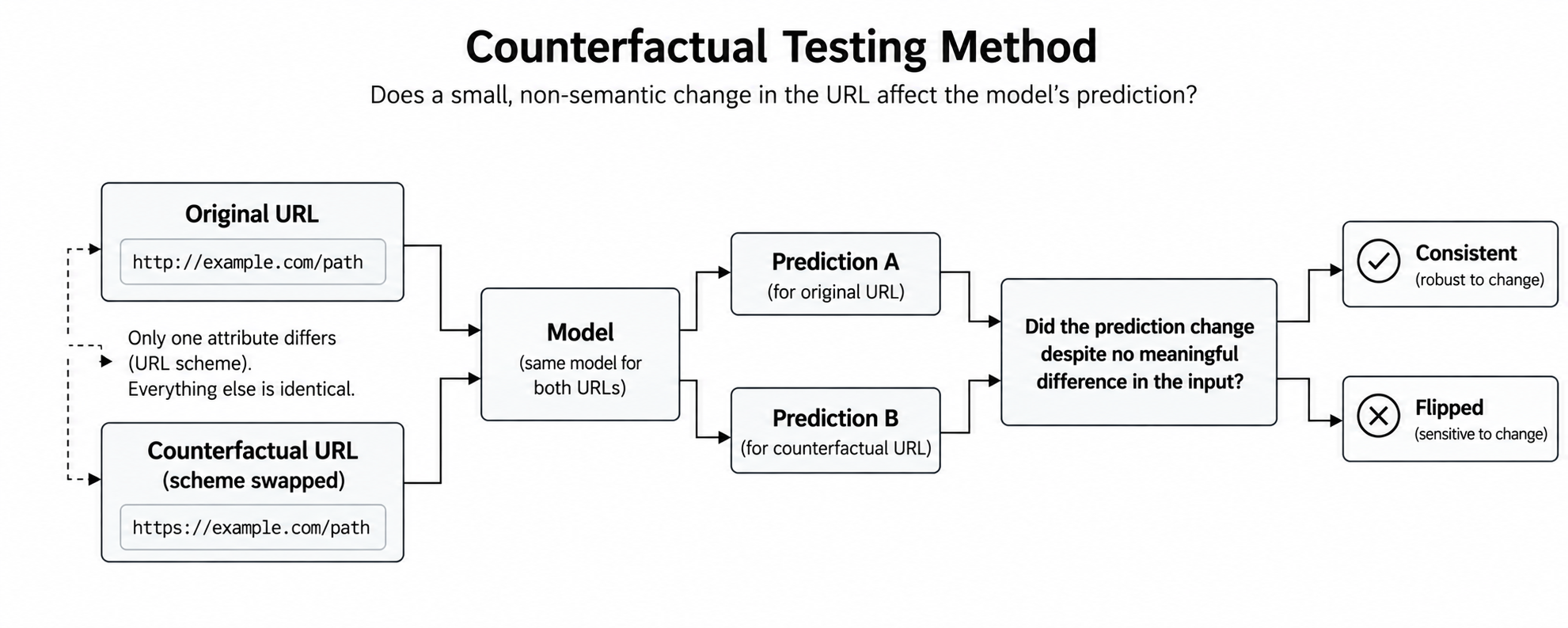
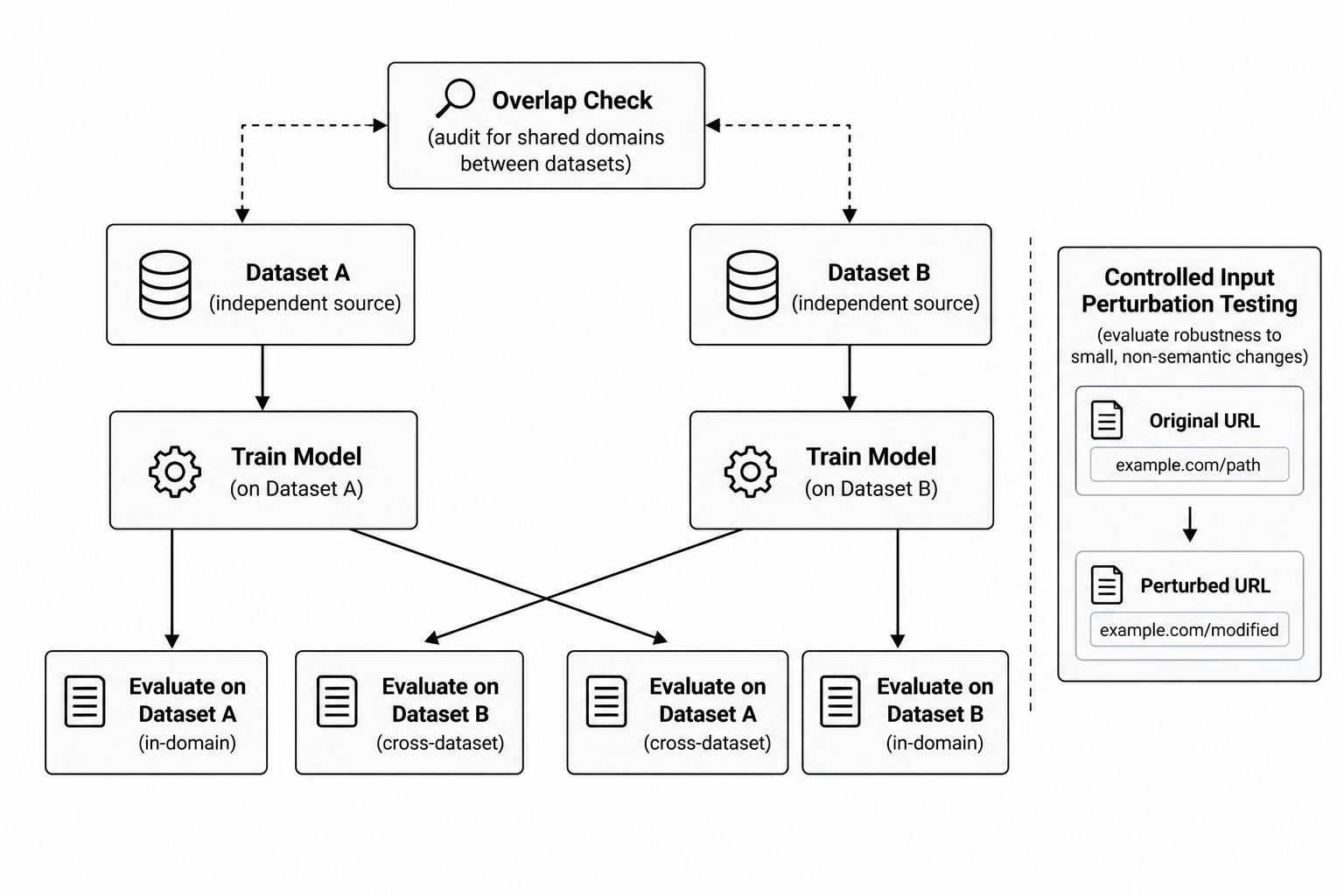
Once the evaluation was actually trustworthy, a different question mattered more than raw accuracy: would any of this hold up outside the exact dataset it was built on? That question has shaped most of what I've worked on since. I've spent time testing whether performance that looks strong on one dataset survives contact with a completely different, independently collected one, and checking whether a model might be quietly leaning on something superficial, like a URL's scheme or some coincidental pattern in how a dataset was put together, instead of anything that actually points to malicious intent. That turned into several threads of work running in parallel. Some of it is submitted for peer review now, some of it is still in progress.
One preliminary study from this line of work, comparing several URL representations through multi-view fusion, has since been accepted as a poster at ADMA 2026. That was a genuinely nice milestone after a lot of quiet, unglamorous evaluation work. If there's one idea tying the whole direction together, it's that no single representation dominates. A method that looks strongest on one dataset often isn't the one that transfers best to another, and counterfactual testing keeps showing that strong aggregate numbers can hide a model leaning on signals that have nothing to do with actual malicious intent. That's the thread I'm still pulling on.
Full methodology and results for work that is still ongoing or submitted are not disclosed here, as this research is intended for conference submission. Details will be shared as each piece moves toward publication.